
Local Insights
Golf Cart Insurance in Bluffton: Why Your SCDMV Permit Doesn't Mean You're Covered
By Tyler Grizzle , Founding Partner · GSP Insurance Group ·
Golf Cart Insurance in Bluffton: Why Your SCDMV Permit Doesn’t Mean You’re Covered
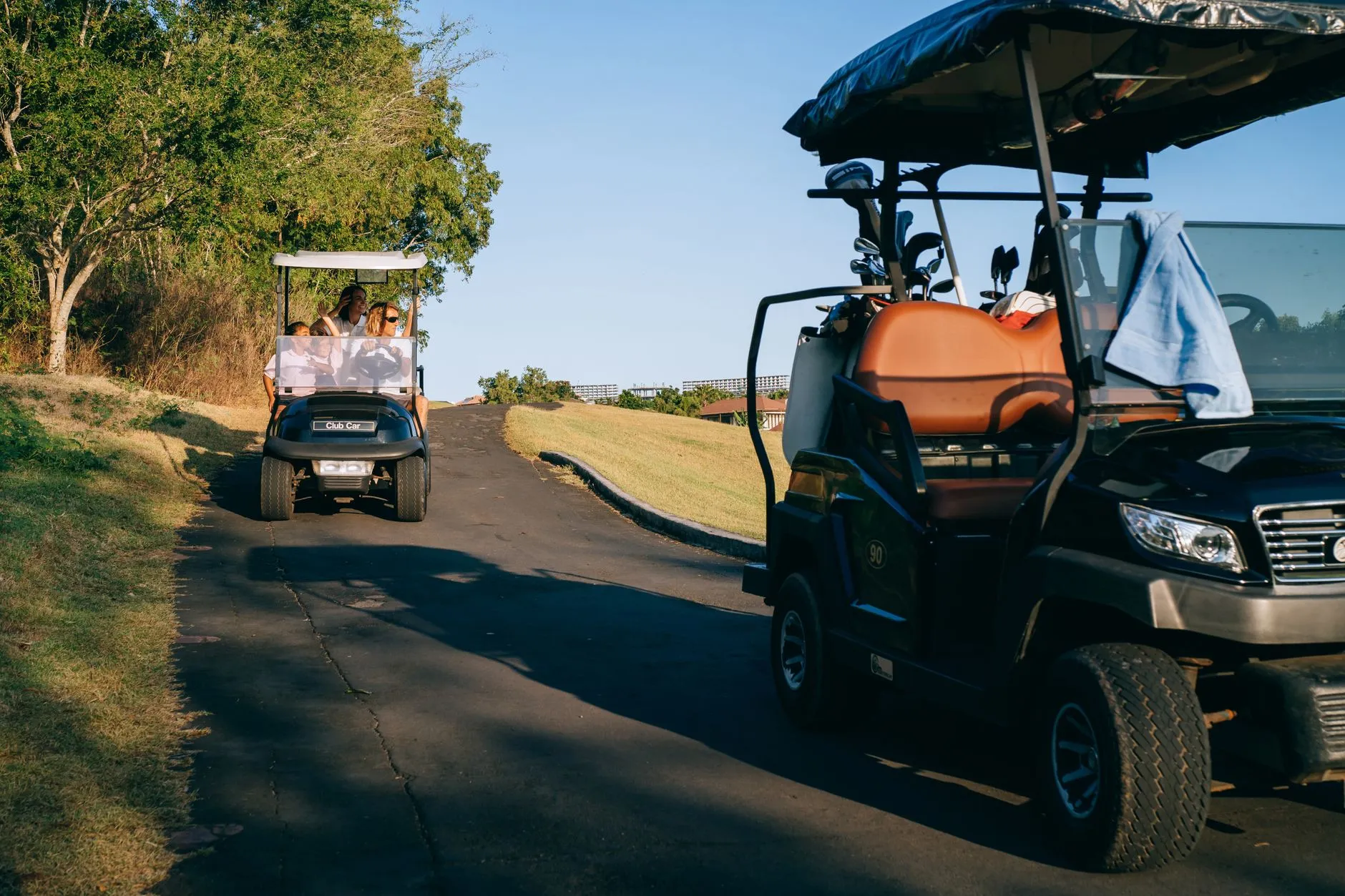
Bluffton is golf cart country. Ride through Palmetto Bluff on a Saturday morning, cruise Sun City’s neighborhood streets at dusk, or cut across Old Town to grab a coffee — and you’ll count more golf carts than you will pickup trucks. It’s one of the things that makes the Lowcountry feel like the Lowcountry.
But here’s the question most cart owners never stop to ask: Is my golf cart actually insured for where I’m driving it?
The honest answer, for a surprising number of Bluffton residents, is no — or at least not in the way they think. A South Carolina golf cart permit is a legal registration tool, not an insurance policy. And the coverage gap between riding inside a private community and riding on a public road can leave you personally on the hook for damages, injuries, and legal costs that add up fast.
Let’s walk through exactly what the permit does, what it doesn’t do — and why some of the cheapest golf cart policies on the market won’t help you when you need them most.
What the SCDMV Golf Cart Permit Actually Does
South Carolina law allows golf carts to operate on public roads under specific conditions — but those conditions come with paperwork. To drive your cart on a public road legally, you need to register it with the SCDMV and obtain a golf cart permit.
Here’s the part that catches people off guard: getting that permit only requires proof that some insurance policy exists. Nobody at the SCDMV — or the county — is reading your policy to confirm it actually covers you while you’re driving on the road. They’re checking a box, not checking your coverage.
That means it’s entirely possible to walk out of the permit office with a decal on your cart and a policy in your file that was never built to protect you the way you think it is. The permit is a legal prerequisite for road use — not a substitute for a real, correctly-rated golf cart insurance policy.
The On-Road vs. Off-Road Coverage Gap — and Where It’s Coming From
This is where a lot of Bluffton cart owners get caught off guard, and it’s worth being direct about it.
There are two very different types of golf cart insurance on the market, and they both come with an insurance ID card that looks basically identical:
- Off-road / recreational policies — built for carts that stay inside a private, gated community or on private property. Cheap, simple, limited.
- On-road / permitted-use policies — built for carts that are actually being driven on public streets, matching what your SCDMV permit assumes you have.
We’ve seen carriers — including “Big Red” and other large direct-to-consumer players like Progressive Direct — sell the off-road version to customers whose carts are permitted and actually used on public roads. Sometimes that’s an agent moving fast on a cheap quote without asking the right question. Sometimes the customer is told, directly, that they’re covered for road use when the policy in hand simply isn’t built for it. Either way, the person left holding that gap is the cart owner — and it usually doesn’t surface until there’s already been an accident.
Once you take that cart onto a public road — even a quiet neighborhood road in Old Town Bluffton or a crosswalk near a shopping center — you’ve entered a different legal and insurance world. Now your cart is, effectively, a motor vehicle on a public roadway. If you cause an accident, the injured party can pursue you for medical expenses, lost wages, property damage, and more. An off-road recreational policy almost certainly won’t respond to that claim, no matter how long you’ve been paying the premium.
For a deeper look at how these distinctions play out, Street-Legal or Neighborhood Only? The Golf-Cart Coverage Rules No One Explains is a great starting point.
A Real Bluffton Scenario: When the Gap Becomes Real
Imagine a family in Bluffton Park heading into Old Town on a Friday night — dinner at one of the restaurants, then a sunset ride down to the Calhoun Street dock to watch the light hit the May River. It’s about as classic a Bluffton evening as there is, and it means crossing a few public streets along the way. They have a valid SCDMV permit on the cart. They were quoted a cheap golf cart policy online and told it would cover them.
On the way back from the dock, crossing an intersection near Calhoun Street, they clip another cart pulling out from a side street. Nobody’s seriously hurt, but there’s a trip to urgent care, a damaged cart, and a claim that needs to get paid.
The policy in hand was written and rated for private-property, recreational use only. It excludes public road liability. The SCDMV permit provides no coverage of its own. The family is now personally exposed to a liability claim with no policy stepping in to defend them or pay — despite having done everything they were told to do.
This isn’t a worst-case hypothetical. It’s the kind of situation that plays out on ordinary Bluffton streets more than most people realize — and it’s entirely avoidable with the right policy in place from the start.
What On-Road Golf Cart Coverage Actually Looks Like
A proper on-road golf cart policy functions a lot like an auto insurance policy for a low-speed vehicle. It typically includes:
- Liability coverage — pays for bodily injury and property damage you cause to others while operating the cart on a public road
- Collision coverage — covers damage to your own cart from an at-fault accident
- Comprehensive coverage — covers theft, vandalism, storm damage (relevant in a coastal community where hurricane season is real)
- Uninsured/underinsured motorist coverage — protects you if someone hits your cart and they carry little or no insurance
- Medical payments coverage — helps with injury costs for you and your passengers regardless of fault
Your carrier and the specific policy language will determine exactly what’s included and what’s excluded — a licensed GSP agent will confirm the exact terms and limits that apply to your situation, including whether the policy is actually rated for the way you use your cart.
If you want to understand how liability limits work more broadly — and why the minimum is rarely enough — Why Minimum Auto Insurance Coverage Won’t Cut It in Bluffton & Hilton Head covers that ground well.
Common Mistakes Bluffton Cart Owners Make
Assuming a cheap policy automatically covers road use. If the quote was fast and inexpensive, it’s worth asking directly: is this rated for on-road use, or private property only? Get the answer in writing.
Thinking the permit equals coverage. As covered above: it doesn’t. The permit is a registration document. Insurance is a separate contract, and the state never verifies the two actually match.
Skipping uninsured motorist coverage. In South Carolina, not every driver on the road carries adequate insurance. If an uninsured driver hits your cart while you’re legally riding on a public road, you want a policy that responds. The South Carolina Department of Insurance provides resources on state-required coverage minimums and consumer protections worth reviewing.
Forgetting about passengers. If a friend or family member is riding with you and gets hurt in an accident you cause, your liability exposure includes their injuries too. Medical payments coverage becomes very relevant very quickly in that situation.
Not revisiting coverage when the cart gets upgraded. A lithium-battery conversion, a lift kit, custom seats, or an upgraded sound system adds value to your cart. If your policy was written on the original cart’s value, that added value may not be covered. The Insurance Information Institute offers solid general guidance on insuring recreational vehicles and personal property.
What About an Umbrella Policy?
An umbrella policy can add a meaningful layer of liability protection above your primary policies — but it generally follows the underlying policy’s structure. If your primary golf cart policy doesn’t cover on-road liability, your umbrella won’t step in to fill that gap either. The umbrella isn’t a fix for a mismatched underlying policy; it’s designed to extend coverage that already exists.
For Bluffton residents who use their carts frequently on public roads, getting the primary policy right — and making sure it’s actually rated for the way the cart is used — is step one. Layering an umbrella on top is step two.
The Bottom Line
A permit sticker tells you the state knows your cart exists. It doesn’t tell you whether your insurance will actually respond if something goes wrong. If your cart touches a public road — even occasionally — it’s worth five minutes to confirm your policy was built for that, not just priced for it.
Send us your current golf cart declarations page and we’ll tell you straight — plainly, no sales pitch — whether it actually matches how you use your cart.
GSP Insurance Group 8 Buckingham Plantation Dr, Bluffton, SC 29910 843.474.0345 | info@gspins.com | www.gspins.com A Partner for Your Journey.