
Lowcountry Living
How to Think About the Cost of Flood Insurance in the Lowcountry
By Tyler Grizzle , Founding Partner · GSP Insurance Group ·
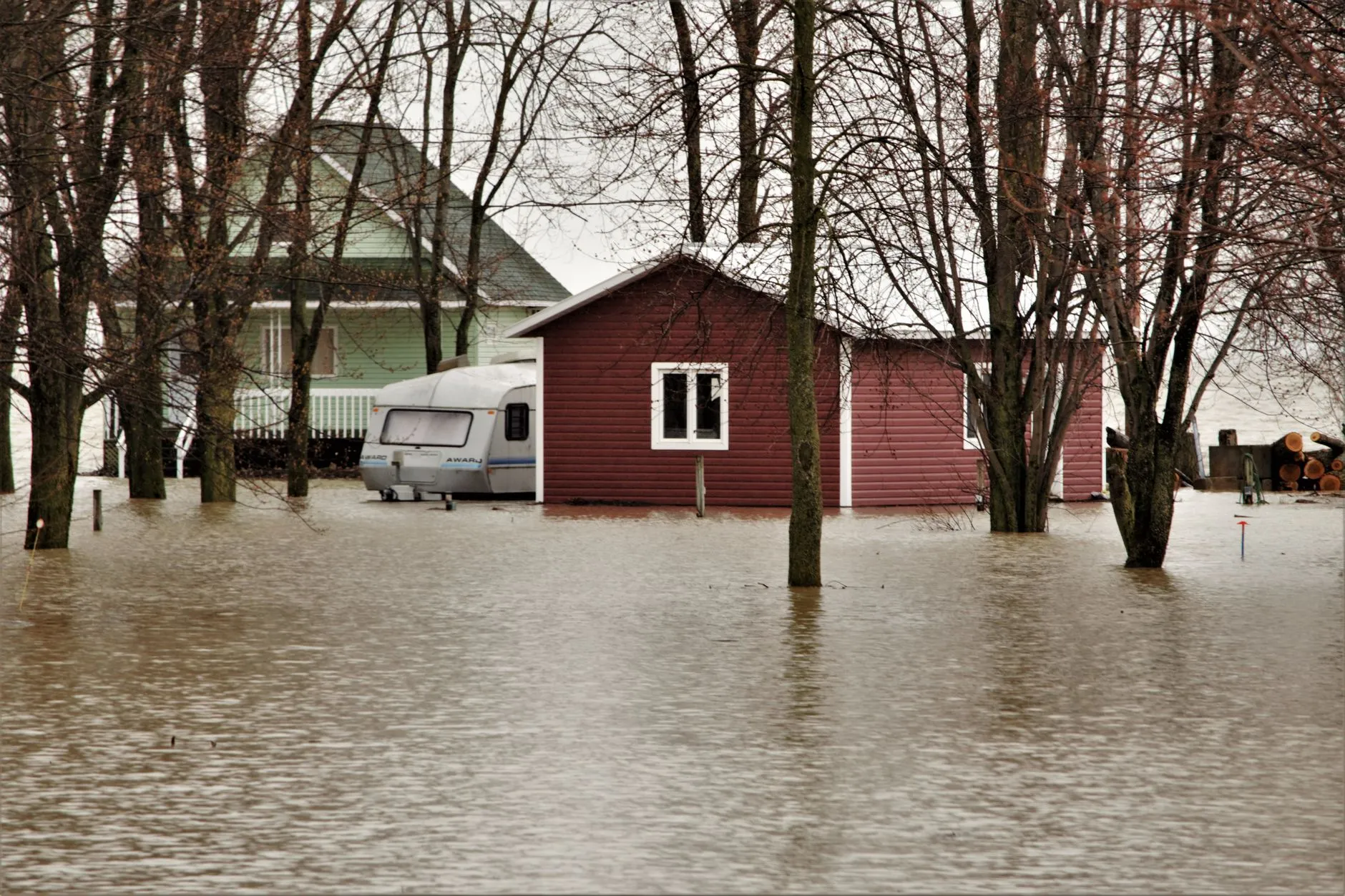
How to Think About the Cost of Flood Insurance in the Lowcountry
Last reviewed: June 2025. Flood map designations, NFIP rating methodology, and private market options evolve — a licensed GSP agent can confirm current details for your property.
If you’ve looked into flood insurance for your Bluffton, Hilton Head, or Beaufort home and felt a little sticker shock, you’re not alone. It’s one of the most common questions we hear: Is flood insurance really worth the cost? The honest answer is that it depends — but the factors that shape that answer are worth understanding deeply before you decide.
This post isn’t going to give you a quote or a magic number. What it will do is help you understand what drives the cost of flood insurance in coastal South Carolina, how to weigh it against real risk, and how to have a smarter conversation with a licensed agent. GSP Insurance Group is an independent, licensed insurance agency serving homeowners in South Carolina and Georgia, which means we work with multiple carriers and programs — including both NFIP and private flood options — to find the best fit for each client, not to push any single product.
The Short Answer: What You’re Actually Paying For
Flood insurance pays for something that your standard homeowners insurance policy simply will not — damage caused by rising water, storm surge, and overflow from rivers, tidal creeks, and drainage systems. That’s not a footnote; it’s a hard exclusion that catches many homeowners off guard after a major storm.
When you purchase a separate flood policy, you’re closing a gap that your homeowners insurance leaves open by design. In coastal South Carolina, where tidal flooding is increasingly routine and hurricane season brings real storm surge risk to communities like Beaufort, Bluffton, and Hilton Head, that gap is not theoretical. The cost of the policy has to be understood in that context — not compared to a homeowners insurance premium in isolation, but compared to the potential cost of repairing or rebuilding without any flood coverage at all.
What Drives the Cost of Flood Insurance in Coastal SC
Several factors combine to determine what a flood policy costs for any given property. Understanding them helps you think clearly about your own situation — and have a more informed conversation with your agent.
Your flood zone designation. FEMA publishes flood maps that assign risk designations to every parcel in South Carolina. Properties in high-risk Special Flood Hazard Areas — often labeled AE, VE, or similar zones — generally carry higher premiums than properties in moderate- or low-risk zones. On Hilton Head Island, waterfront and near-waterfront properties in VE zones are coastal high-hazard areas subject to wave action, and NFIP pricing reflects that elevated exposure. You can look up your property’s current designation using FEMA’s Flood Map Service Center at msc.fema.gov.
Your home’s elevation relative to the Base Flood Elevation (BFE). Under the NFIP’s current rating methodology — Risk Rating 2.0, introduced in 2021 — elevation relative to projected flood levels plays a significant role in pricing. The higher your home’s lowest floor sits above the BFE for your area, the lower your expected loss from a flood event, and typically the more favorably your risk is priced. Even modest differences in elevation can meaningfully shift where a property lands in the rating. Elevation certificates are no longer required by the NFIP for rating purposes, but they can help private carriers assess your risk with more precision — and sometimes surface a more competitive price.
Pre-FIRM versus post-FIRM construction. Homes built before FEMA’s original flood maps were adopted — known as pre-FIRM properties — are often rated differently than newer construction built to modern floodplain management standards. An older slab-on-grade home in a Beaufort tidal basin neighborhood that predates local floodplain ordinances will typically carry a different risk profile than a newer elevated home built to current standards on the same street, even if they share the same flood zone designation.
Your chosen coverage amounts and deductible. NFIP flood policies cover two things separately: the physical structure of your home and your personal contents. You choose coverage levels for each, and a higher deductible reduces your annual premium in exchange for a larger out-of-pocket exposure if you file a claim. Understanding that trade-off — what you’d absorb in a loss versus what you’d save over time — is worth working through carefully with a licensed agent who knows the South Carolina coastal market.
NFIP versus private flood insurance. There are two main sources of flood coverage: the National Flood Insurance Program, which is federally backed and available through licensed agents across South Carolina, and private flood insurers operating in the admitted and surplus lines markets. Private policies sometimes offer broader coverage, higher limits, shorter waiting periods, or different pricing structures depending on the property’s characteristics. For many Lowcountry homeowners, comparing both options side by side — rather than defaulting to one — is worth the extra step. A few key differences are worth knowing:
- Waiting periods: NFIP policies have a standard 30-day waiting period before coverage takes effect. Some private policies carry shorter waiting periods, though terms vary. If a named storm is already in the forecast, it is almost certainly too late to bind new flood coverage in time for that event.
- Coverage scope: NFIP building coverage applies to the structure; contents coverage is separate and optional. Some private policies bundle additional living expenses or offer replacement cost on contents, which NFIP does not.
- Limits: NFIP building coverage has a statutory maximum. If your home’s replacement cost exceeds that ceiling — not uncommon for larger or higher-end properties on Hilton Head or in Bluffton’s newer communities — a private policy or an excess flood layer may be the only way to fully protect your investment.
The Insurance Information Institute’s flood insurance FAQ at iii.org provides a solid independent overview of how both the NFIP and private flood markets work for homeowners navigating this decision.
The South Carolina Risk Equation Many Homeowners Skip
Here’s a scenario worth sitting with: A homeowner on a Bluffton tidal creek purchases a home and decides against flood insurance because their parcel sits just outside the high-risk zone boundary on the current FEMA map. A slow-moving tropical system stalls over the South Carolina coast and drops significant rainfall while pushing storm surge up the May River. The home floods. Their homeowners insurance policy won’t pay a cent for the water damage. Repairs come entirely out of pocket.
This isn’t a hypothetical designed to scare you — it’s a pattern that repeats across the Southeast after major storms. A significant share of NFIP claims historically come from properties outside the designated high-risk zones, which tells you something important about the relationship between flood zone boundaries and actual flood risk. The Lowcountry’s geography — low elevation, tidal creeks, flat terrain, and aging stormwater infrastructure — means that being outside a high-risk zone is not the same as being outside flood risk.
The same dynamic applies further up the South Carolina coast. Homeowners in areas like Myrtle Beach face similar questions about carolina flood exposure from both storm surge and inland rainfall, and the same principle holds: flood zone boundaries are a regulatory tool, not a guarantee of safety.
For a grounding reference on how flood risk is assessed nationally and in South Carolina, floodsmart.gov — FEMA’s official consumer resource for NFIP — is the right starting point.
Common Mistakes When Evaluating Flood Insurance Cost
A few missteps come up repeatedly when South Carolina homeowners are weighing whether to add flood coverage:
Waiting until a storm is forecast. As noted above, the standard NFIP waiting period means that purchasing coverage the week a named storm develops is almost always too late. The time to have this conversation is well before hurricane season is active — ideally in the late winter or early spring.
Only looking at the annual premium. The premium is one number, but it’s not the whole picture. Your deductible, what’s actually covered (structure versus contents), whether additional living expenses are included, and whether the coverage limit is sufficient to make you whole are all equally important. A lower-cost policy that leaves you significantly underinsured isn’t a bargain — it’s a false economy.
Assuming the lender’s flood insurance requirement tells the whole story. If your mortgage lender requires flood insurance, they’re setting a floor to protect their loan. That floor may be well below what it would actually cost to restore your home and belongings after a significant flood event. The lender’s requirement protects the lender; adequate coverage protects you.
Not revisiting the decision after a map change or renovation. FEMA updates flood maps over time as new data, development patterns, and modeling improve. A property that wasn’t in a high-risk zone when you purchased may be remapped into one. Similarly, if you’ve elevated your home or made structural changes, that may affect your rating under the NFIP or qualify you for better private market pricing. It’s worth reviewing your flood zone status and coverage periodically — not just at purchase.
Skipping contents coverage. It’s common for homeowners to insure the structure but skip the separate contents portion of an NFIP policy to reduce cost. After a flood, the personal property inside a home — furniture, appliances, electronics, clothing — can represent a substantial portion of the total loss. Whether contents coverage makes sense for your situation is worth discussing specifically, not just assuming either way.
How to Think About Value, Not Just Cost
Flood insurance is one of those coverages where the value is most visible in retrospect — which is exactly why it’s worth thinking through before you need it. The annual premium is a known, manageable cost. The cost of an uninsured flood loss in South Carolina is unpredictable, potentially catastrophic, and entirely your responsibility without coverage.
For homeowners across Bluffton, Hilton Head, Beaufort, and coastal South Carolina more broadly, the underlying risk is well-documented and, in many areas, increasing. The question of whether a flood policy is “worth it” for your specific property — given your zone, your elevation, your home’s value, and your financial cushion — is a conversation worth having with someone who understands the coastal South Carolina insurance market and can walk through the actual numbers with you.
What we can say with confidence: the cost of flood insurance, whatever it is for your property, is a known quantity you can budget for. The cost of flooding without insurance is not.
Talk to a GSP Agent Before You Decide
At GSP Insurance Group, we work with homeowners across Bluffton, Hilton Head, Beaufort, and the broader South Carolina coast every day. As an independent, licensed insurance agency in South Carolina and Georgia, we can help you understand your flood zone designation, compare NFIP and private flood options side by side, and figure out what level of coverage actually makes sense for your home and situation — without steering you toward any single program.
We’re not here to sell you something you don’t need. We’re here to make sure you understand what you’re choosing — and what you’re choosing to leave unprotected.
Ready to think through flood insurance for your home? Reach out to a GSP agent and we’ll walk through it together — no pressure, just clarity.